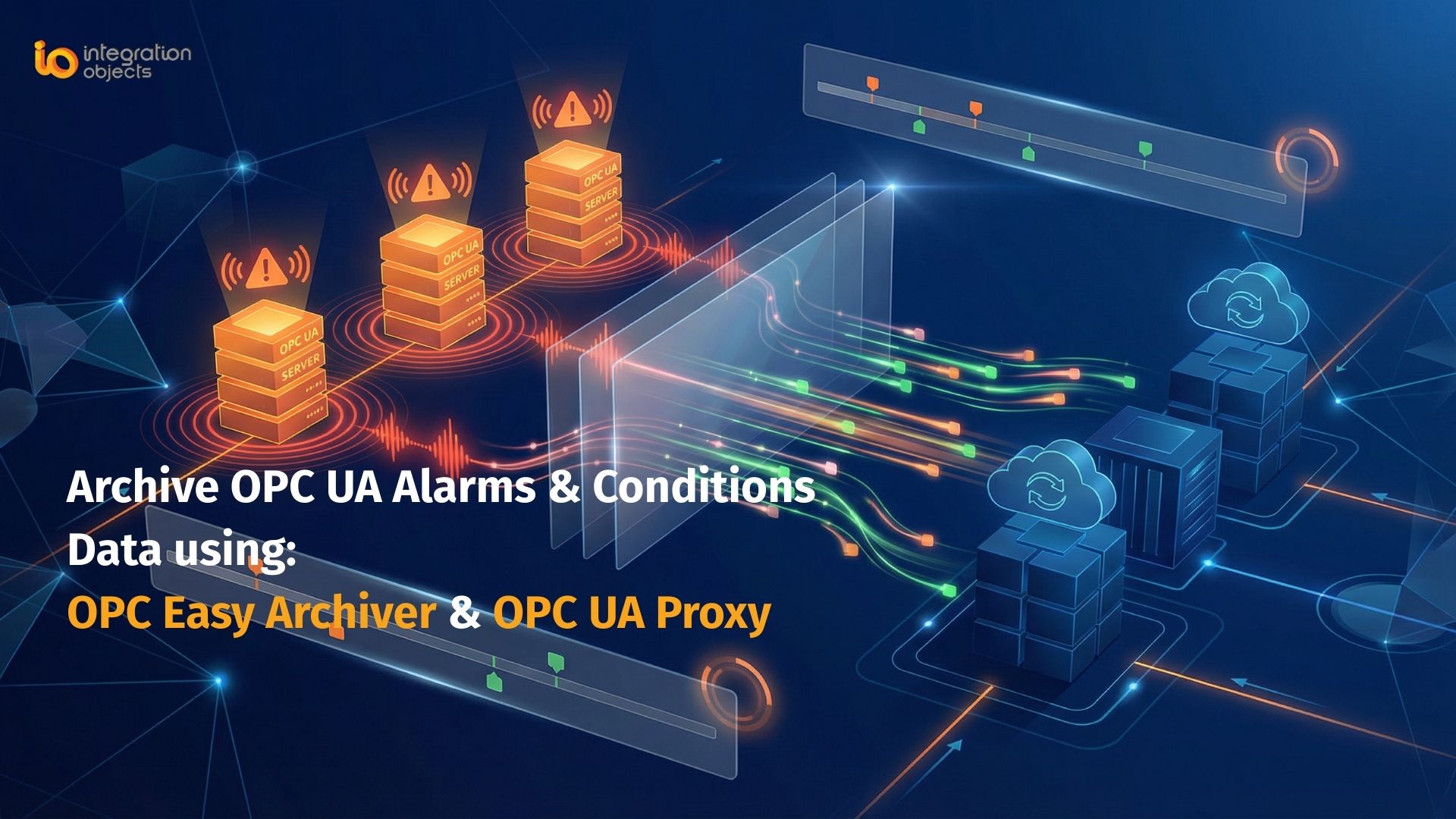
OPC UA Alarms and Conditions refers to the alarm and condition-monitoring model built into the OPC UA standard, which reports abnormal states (alarms) and tracks their lifecycle – active, acknowledged, cleared – as conditions with full timestamps. Archiving this data means capturing every alarm and condition change from one or more OPC UA servers and storing it in a structured database, rather than only viewing it live on an HMI. For industrial operations, this creates a permanent, queryable record used for compliance audits, root-cause investigations, and KPI reporting. OPC Easy Archiver combined with OPC UA Proxy handles this by aggregating alarms and conditions from multiple OPC UA servers, encrypting the connection, and writing the data into standard databases such as MS SQL, Oracle, or Azure SQL – with store-and-forward buffering so no alarm is lost during a network outage.
In modern industrial systems, alarms and conditions are critical for ensuring operational safety and efficiency.
-
Alarms represent events that require immediate attention, such as equipment failures, threshold violations, or safety hazards.
-
Conditions track the state of these alarms over time, including when they were triggered, acknowledged, or cleared.
Together, alarms and conditions form a complete picture of your operational events. Collecting and archiving this data is crucial for real-time monitoring, compliance, and historical analysis.
However, managing alarms and conditions across multiple OPC UA Servers can be complex. Differences in server configurations, high data volumes, and secure storage requirements pose significant challenges. This is where OPC Easy Archiver and OPC UA Proxy come in.
Why Combine OPC Easy Archiver & OPC UA Proxy?
Individually, each product is powerful – together, they create a seamless, scalable solution:
-
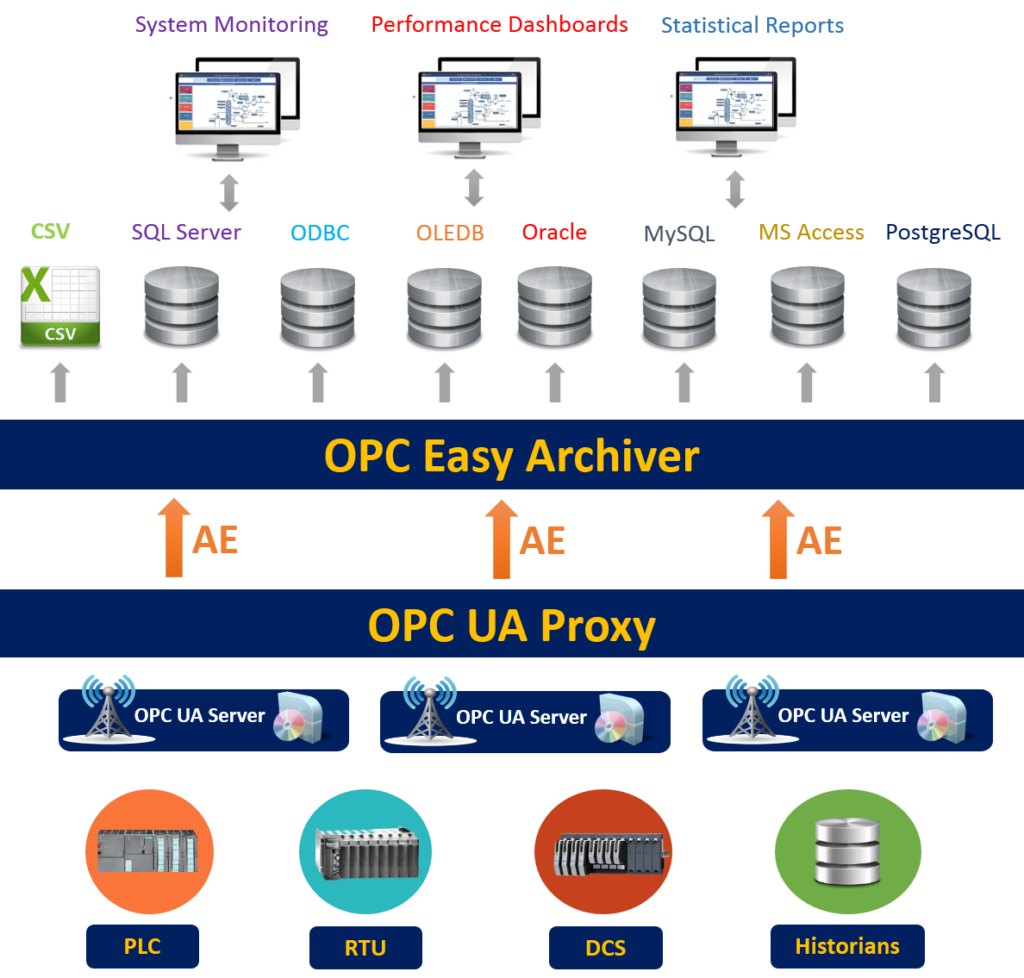
OPC Easy Archiver handles data collection, storage, and management, ensuring your alarms and conditions are archived reliably.
-
OPC UA Proxy simplifies connectivity and security, aggregating data from multiple OPC UA Servers without complex networking or high server load.
By combining both, you get:
-
Real-time aggregation from multiple servers
-
Secure, encrypted data transfer
-
Flexible storage options, including relational databases and cloud solutions
-
Centralized access for monitoring and historical analysis
This combination ensures operational continuity, compliance, and efficient industrial data management.
How OPC Easy Archiver Works with Alarms & Conditions
OPC Easy Archiver is designed to capture both alarms and conditions continuously, making it easy to maintain historical records and analyze trends. Key capabilities include:
-
Real-time alarm collection: Capture alarms as soon as they are triggered across multiple servers.
-
Condition tracking: Store information about alarm acknowledgment, resolution, and clearing events.
-
Flexible storage options: Save data to MS SQL, Oracle, MySQL, or ODBC databases, or export as CSV for reporting.
-
Cloud-ready architecture: Push your archived alarms and conditions to platforms like Azure SQL for centralized, scalable monitoring.
-
Reliable delivery: Built-in store-and-forward ensures no data loss even during network interruptions.
How OPC UA Proxy Supports Secure and Scalable Connectivity
OPC UA Proxy acts as an intermediary that connects multiple OPC UA Servers to OPC Easy Archiver, providing:
-
Simplified connectivity: Aggregate alarms and conditions without reconfiguring each server individually.
-
Enhanced security: Supports encrypted channels and secure certificates for data transfer.
-
Lightweight integration: Minimal impact on server performance while maintaining real-time data flow.
-
Flexible deployment: Can be installed locally near servers or centrally on gateways for optimal network efficiency.
-
Seamless cloud integration: Works hand-in-hand with OPC Easy Archiver to push data to databases or cloud storage.
Benefits of Archiving OPC UA Alarms & Conditions
Using this combination gives your operations a strategic advantage:
-
Improved Operational Awareness: Access real-time alarms and conditions from multiple servers in a single view.
-
Compliance & Audit Trails: Maintain historical records of alarms and acknowledgments for regulatory and safety requirements.
-
Centralized Data for Analytics: Historical data can be analyzed for trends, KPI tracking, and predictive maintenance.
-
Reduced Downtime: Quick visibility into alarms and conditions helps your teams respond faster to critical events.
-
Scalable Architecture: Handle growing data volumes as your industrial network expands.
Conclusion
Collecting and managing OPC UA alarms and conditions is critical for safe, efficient, and compliant industrial operations. By combining OPC Easy Archiver with OPC UA Proxy, you can implement a solution that is secure, scalable, and cloud-ready, ensuring real-time access, historical analysis, and reliable archiving across multiple servers.
Whether on-premises or in the cloud, this combination transforms raw alarm and condition data into actionable insights for better decision-making and operational excellence.
Start your free trial now!
Frequently Asked Questions
Do I need OPC UA Proxy if I only have one OPC UA server?
Not necessarily. OPC UA Proxy's main value is aggregating alarms and conditions from multiple OPC UA servers through a single, secure connection. With a single server, OPC Easy Archiver can connect to it directly; OPC UA Proxy becomes useful once you're consolidating data from several servers or need an added security layer.