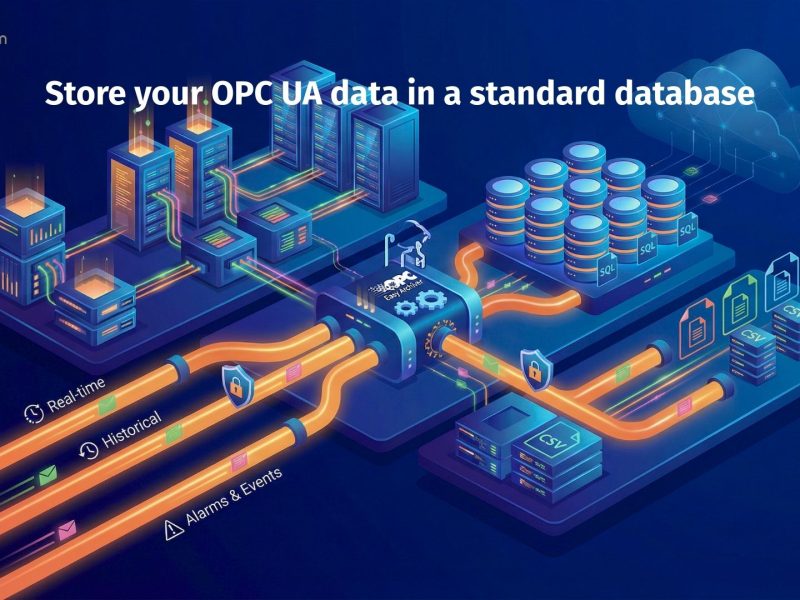
Many industrial facilities still rely on OPC Classic technologies to manage alarms and events. However, these systems often expose organizations to serious DCOM vulnerabilities that affect reliability, security, and operational efficiency.
DCOM was originally designed for local Windows communication and struggles to meet the requirements of modern industrial networks. As a result, engineers frequently face connection failures, firewall complications, and cybersecurity risks when managing OPC AE communications.
This article explains why DCOM vulnerabilities remain a critical issue in industrial alarm systems and how a tunneling architecture combined with secure alarm archiving can eliminate these risks while improving reliability and compliance.
Why DCOM Vulnerabilities Persist in Industrial Alarm Systems
DCOM was never designed for today’s segmented, security-focused industrial networks. Consequently, it introduces several DCOM vulnerabilities that impact cybersecurity, system stability, and engineering productivity.
|
1. High cybersecurity exposure |
DCOM communication requires dynamic port ranges to remain open across network segments. Unfortunately, this behavior significantly increases the attack surface of industrial systems. Because of this, many organizations struggle to comply with cybersecurity frameworks such as ISA/IEC 62443 when OPC AE relies on DCOM communication. |
|
2. Complex firewall and domain rules |
Another major DCOM vulnerability is the complexity of firewall configuration. DCOM communication relies on:
As a result, communication frequently fails when OPC AE servers operate across segmented networks. |
|
3. Unreliable remote OPC connections |
DCOM also causes instability in distributed environments. Connections often break when:
When these failures occur, engineers must manually reconnect clients, which increases the risk of alarm data loss. |
|
4. No encryption for alarm and event traffic |
One of the most serious DCOM vulnerabilities is the absence of native encryption. OPC AE communication over DCOM transmits alarm and event data in clear text unless additional security layers are implemented. Consequently, sensitive operational data may be exposed on the network. |
|
5. Engineering time lost in troubleshooting |
DCOM misconfiguration remains one of the most common causes of OPC connectivity issues. Engineers frequently spend hours troubleshooting domain permissions, RPC dependencies, and firewall rules instead of focusing on operational improvements. Because of these recurring problems, many industrial organizations are now looking for DCOM-free architectures that preserve their existing OPC infrastructure while improving security and reliability. |
A Modern Architecture to Eliminate DCOM Vulnerabilities
A widely adopted method to eliminate DCOM in industrial systems is to use a tunneling layer that replaces DCOM communication with secure, encrypted channels. This architecture also enables centralized alarm collection, consistent database logging and simpler network segmentation.
A modern DCOM-free architecture should provide:
- Encrypted communication between OPC AE servers and clients
- Stable connections across domain boundaries and firewalls
- Authentication and least privilege access
- Store and forward mechanisms for resilience
- Cloud and on-premises database flexibility
- Easy deployment without changes to existing OPC AE servers
This approach protects OT systems while still supporting legacy infrastructure.
|
|
How the Architecture Works
Below is the typical workflow that eliminates DCOM entirely and creates a secure alarm collection pipeline.
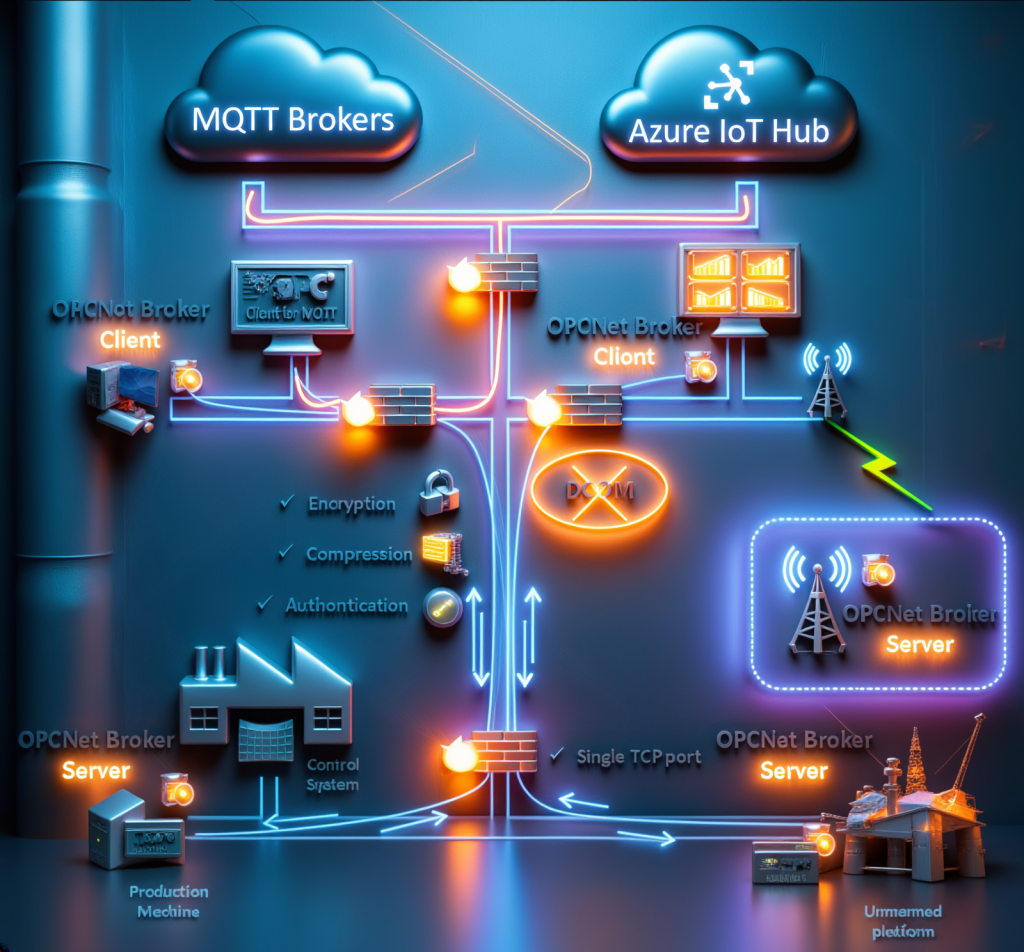
- Server side tunneling: OPCNet Broker is installed near the OPC AE servers inside the secured control network. It communicates with the servers locally and securely tunnels the data.
- Encrypted communication through firewalls: The tunnel crosses firewalled zones using predictable ports, which simplifies firewall rules and avoids opening RPC port ranges.
- Client side tunneling: Another instance of OPCNet Broker® receives the data and exposes it locally as OPC AE.
- Alarm collection and archiving: OPC Easy Archiver connects to this local endpoint, collects alarms in real time and stores them in the selected database.
- Analytics and reporting: Business intelligence tools can use the structured alarm database for KPIs, compliance documentation and optimization initiatives.
This architecture strengthens cybersecurity, increases reliability and simplifies maintenance.
Security, Reliability and Compliance Benefits
By eliminating DCOM, facilities gain several operational advantages
|
Reinforced cybersecurity |
|
|
Reliable alarm transmission
|
|
|
Cloud-ready workflows
|
With OPCNet Broker® protecting the OT perimeter, OPC Easy Archiver can store alarms into cloud databases like Azure SQL without exposing the control network. |
|
Streamlined compliance and reporting |
Historical alarm data supports:
|
Where This Architecture Delivers the Most Value
This approach is widely used in:
- Chemical and petrochemical plants
- Power generation and utilities
- Water and wastewater facilities
- Food and beverage operations
- Pharmaceutical manufacturing
- Oil and gas upstream, midstream and downstream
- Critical buildings and hospitals
Any site with legacy OPC AE running over DCOM benefits from this modernization.
Conclusion
DCOM has become a significant obstacle in modern industrial environments. It introduces avoidable security risks, complicates firewall configurations and causes recurring communication failures. By adopting a tunneling architecture with structured alarm archiving, facilities can gain higher security, improved reliability and a more sustainable alarm management system.
OPCNet Broker® removes DCOM entirely and secures alarm traffic. OPC Easy Archiver provides a robust historian for long-term storage, analysis and compliance.
Together they deliver modern, reliable and cloud-ready architecture for OPC AE alarm management.
Related Resources:
- White Paper: Industrial Network Security with OPC Tunneling
- Video Tutorial: How to Store OPC Alarms & Events in SQL Database
- OPC AE Archiver User Guide