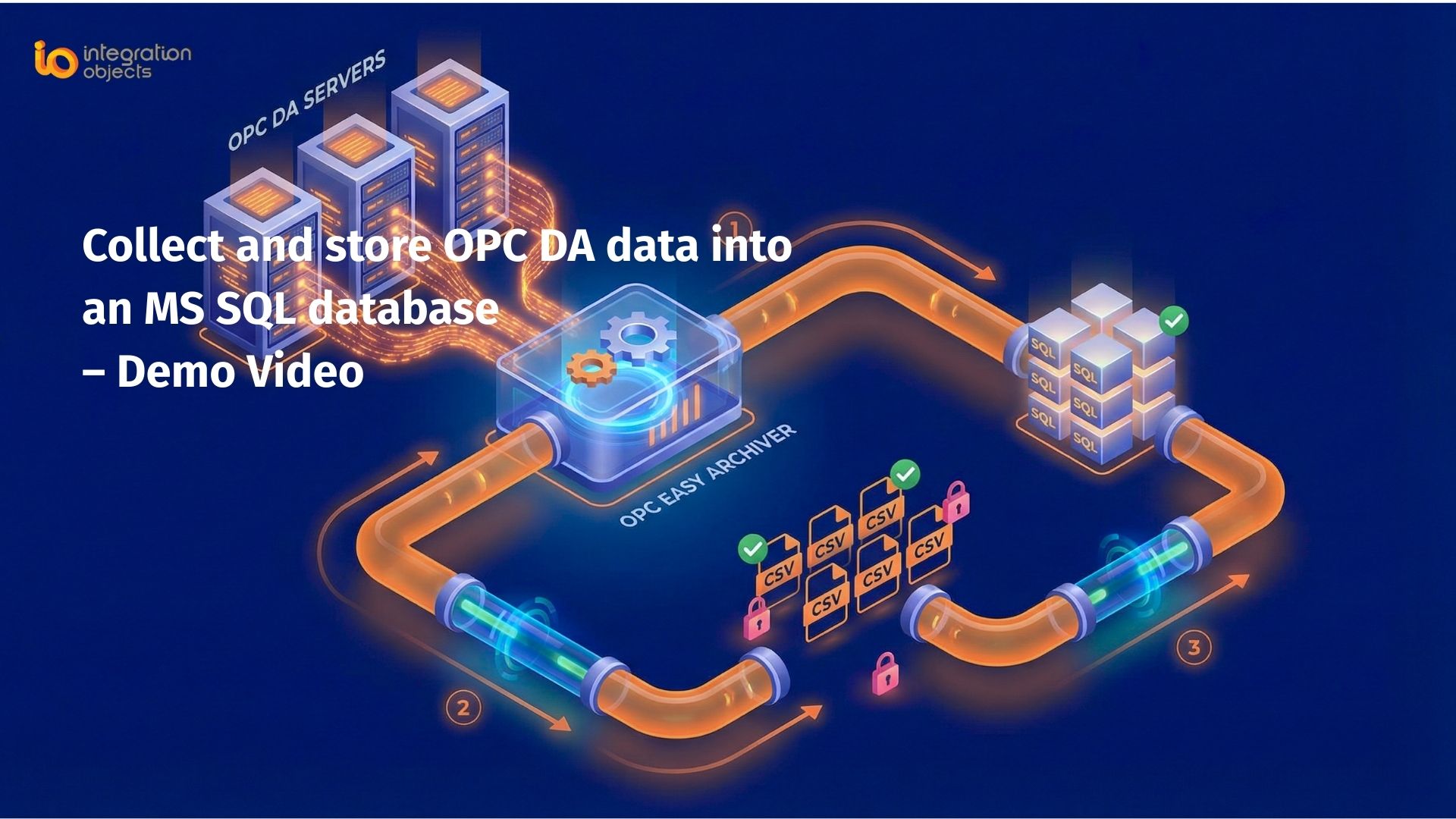
In industrial environments, storing OPC DA to MS SQL ensures your real-time process data remains available for reporting, analytics, compliance, and long-term monitoring.
Using OPC Easy Archiver, you can collect data directly from OPC DA servers and save it in MS SQL Server databases, creating a scalable and efficient industrial data archiving solution.
Why Store OPC DA Data in MS SQL?
OPC DA (Data Access) is a standard protocol that allows software clients to read real-time data from industrial devices and control systems. However, real-time values can disappear if you don’t store them
MS SQL (Microsoft SQL Server) is a widely used relational database that organizes data in structured tables, making it easy to query, analyze, and integrate with dashboards or BI tools.
By storing OPC DA to MS SQL, you can:
-
Maintain continuous historical logs for reporting and compliance
-
Perform trend analysis on live and collected data
-
Integrate seamlessly with dashboards and BI tools
-
Ensure traceability and enterprise system integration
-
Turn industrial signals into actionable business intelligence
Demo Video: How to Set Up OPC DA to MS SQL
Watch our demo video to see how you can connect an OPC DA server and store data in MS SQL. This visual guide shows how quickly you can implement a reliable, fully automated industrial data pipeline.
Conclusion
Storing real-time OPC DA data in a structured database is essential for any industrial environment that needs reliable information for reporting, analytics, and compliance.
With OPC Easy Archiver, you can quickly implement a secure, scalable, and fully automated data storage solution that transforms real-time OPC DA signals into actionable business intelligence.
Related Tutorials:
-
How to Store OPC UA Data in a Standard Database (SQL & CSV Logging)
-
How to Collect OPC HDA Data and Store It in MS SQL Server Using OPC Easy Archiver
-
How to Store OPC Alarms & Events in SQL Database Using OPC Easy Archiver
-
How to Configure OPC Easy Archiver to Store OPC Data in SQL Databases